Monday, October 2, 2017

NUCLEAR WEAPONS - Hydrogen Bomb versus Atomic Bomb - An atomic bomb is a fission device, while a hydrogen bomb uses fission to power a fusion reaction. In other words, an atomic bomb can be used as a trigger for a hydrogen bomb. Hydrogen bombs can have much higher yields than atomic bombs, equivalent to megatons of TNT.

.
Nuclear Weapons
Hydrogen Bomb versus Atomic Bomb
Understand the difference between an atomic bomb and a thermonuclear bomb
By Anne Marie Helmenstine, Ph.D
A hydrogen bomb and an atomic bomb are both types of nuclear weapons, but the two devices are very different from each other.
In a nutshell, an atomic bomb is a fission device, while a hydrogen bomb uses fission to power a fusion reaction.
In other words, an atomic bomb can be used as a trigger for a hydrogen bomb.
Take a look at the definition of each type of bomb and understand the distinction between them.

ATOMIC BOMB DEFINITION

An atomic bomb or A-bomb is a nuclear weapon that explodes due to the extreme energy released by nuclear fission.
For this reason, this type of bomb is also known as a fission bomb.
The word "atomic" isn't strictly accurate, since it's just the nucleus of the atom that is involved in fission (its protons and neutrons), rather than the entire atom or its electrons.
A material capable of fission (fissile material) is given supercritical mass, while is the point at which fission occurs.
This can be achieved by either compressing sub-critical material using explosives or by shooting one part of a sub-critical mass into another one.
The fissile material is enriched uranium or plutonium.
The energy output of the reaction can range to the equivalent of about a ton of the explosive TNT up to 500 kilotons of TNT.
The bomb also releases radioactive fission fragments, which result from the heavy nuclei breaking into smaller ones.
Nuclear fallout mainly consists of fission fragments.

HYDROGEN BOMB DEFINITION

A hydrogen bomb or H-bomb is a type of nuclear weapon that explodes from the intense energy released by nuclear fusion.
Hydrogen bombs may also be called thermonuclear weapons. The energy results from the fusion of isotopes of hydrogen -- deuterium and tritium.
A hydrogen bomb relies on the energy released from a fission reaction to heat and compress the hydrogen to trigger fusion, which can also generate additional fission reactions.
In a large thermonuclear device, about half of the yield of the device comes from fission of depleted uranium.
The fusion reaction doesn't really contribute to fallout, but because the reaction is triggered by fission and causes further fission, H-bombs generate at least as much fallout as atomic bombs.
Hydrogen bombs can have much higher yields than atomic bombs, equivalent to megatons of TNT.
The Tsar Bomba, the largest nuclear weapon ever detonated, was a hydrogen bomb with a 50 megaton yield.

ATOMIC BOMB VS. HYDROGEN BOMB

Both types of nuclear weapons release vast quantities of energy from a small amount of matter and release most of their energy from fission, and produce radioactive fallout.
The hydrogen bomb has a potentially higher yield and is a more complicated device to construct.

OTHER TYPES OF NUCLEAR DEVICES

In addition to atomic bombs and hydrogen bombs, there are other types of nuclear weapons:
neutron bomb - A neutron bomb, like a hydrogen bomb, is a thermonuclear weapon. The explosion from a neutron bomb is relatively small, but a large number of neutrons are released.
While living organisms are killed by this type of device, less fallout is produced and physical structures are more likely to remain intact.
salted bomb - A salted bomb is a nuclear bomb surrounded by cobalt, gold, other material such that detonation produces a large amount of long-lived radioactive fallout.
This type of weapon could potentially serve as a "doomsday weapon", since the fall-out could eventually gain global distribution.
pure fusion bomb - Pure fusion bombs are nuclear weapons that produce a fusion reaction without the aid of a fission bomb trigger.
This type of bomb would not release significant radioactive fallout.
electromagnetic pulse weapon (EMP) - This is a bomb intended to produce a nuclear electromagnetic pulse, which can disrupt electronic equipment.
A nuclear device detonated in the atmosphere emits an electromagnetic pulse spherically.
The goal of such a weapon is to damage electronics over a wide area.
antimatter bomb - An antimatter bomb would release energy from the annihilation reaction that results when matter and antimatter interact.
Such a device has not been produced because of the difficulty synthesizing significant quantities of antimatter.


CLICK HERE . . .


CLICK HERE . . .


CLICK HERE . . .


CLICK HERE . . .


CLICK HERE . . .


CLICK HERE . . .


CLICK HERE . . .


CLICK HERE . . .


CLICK HERE . . .


CLICK HERE . . .


CLICK HERE . . .


CLICK HERE . . .


CLICK HERE . . .


CLICK HERE . . .
...
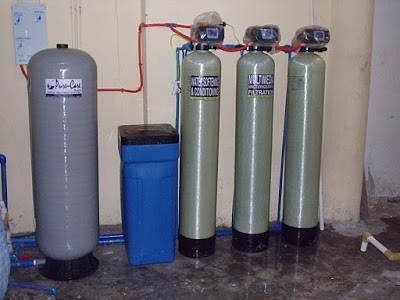
Multi-Media Filter, Highly-Activated Carbon Filter,
Zeolite-Process Water Softener With Brine Tank,
Fiberglass Ballast-Type Pressure Tank
(fully automatic backwash & regeneration)
PURICARE 
INDUSTRIAL 
ENTERPRISES 
Water 
Treatment 
Systems
.
.
...
Aganan, Pavia, Iloilo, Philippines
...

CLICK HERE . . . to view company profile . . .


.
Ballast-Type
Pressure Tanks
.
.

Houston Water Pump with
Mazaki Automatic Pump Controller
Ultra-Violet Bactericidal Lamps

ASTRONAUTS AND THEIR SPACESUITS - How Do Astronauts Choose the Best Color For Their Spacesuits? -

Astronauts during launch (Image source: www.spaceanswers.com)
Astronauts during launch.

Astronauts And Their Spacesuits

How Do Astronauts Choose the Best Color For Their Spacesuits?

Ashish
The moment I hear or think of the word ‘spacesuit’, my mind immediately pictures an astronaut clad in a white spacesuit enjoying the feeling of weightlessness in the vast expanse of space (fortunately, I also imagine their space shuttle in the immediate vicinity).
I’m sure many of you also associate the color white with spacesuits, right?
Or are you among those who relate the color orange with spacesuits?
Or perhaps you belong to an altogether different category of people who, when they think about spacesuits, can’t help but wonder why white and orange spacesuits are the only choices to cover people launching off on space voyages…
If you belong to that third category of people, then you’re about to find out the real reason behind the color choices of white and orange.

Spacesuits

To start with, there are two main kinds of spacesuits: Launch/Entry suits and EVA suits.
Let’s look at them individually to determine their different purposes.

Launch/Entry Suit: The Orange One

It’s easy to refer to it as “the orange suit”, yes, but there is a specific name for this type of suit: the Advanced Crew Escape Suit (ACES) – also informally referred to as the ‘pumpkin suit’.
It is a full-pressure suit that astronauts going into space wear during launch (lift-off).
Pressurized suits are necessary for pilots (or space crew) who fly at altitudes where air pressure may be too low for a person to survive without a protective suit.
A partial-pressure suit is worn by aircrew, whereas a full-pressure suit is worn by space crew.
The suit is designed to protect the wearer from accidents during the launch or landing of the spacecraft.
It consists of certain vital components, including medicine, a radio, flares, survival gear and, of course, a parachute.

But why are ACES orange in color?

It’s not that NASA thought this color would look cool (which, by the way, it does)… there’s more to it.
“It’s highly visible for search and rescue; it’s one of the most visible colors, especially for sea rescue,” said one shuttle crew escape subsystem manager, Brian Daniel, at NASA’s Johnson Space Center in Houston.

EVA Suit: The White One

AstronautThe purpose of an EVA (Extra-Vehicular Activities) suit is entirely different from ACES; an EVA suit is the one that astronauts use during their spacewalks.
These are designed for survival in the harsh conditions of space, which include near-vacuum and thermal extremes.
The suit also protects against small debris floating in the space that may do perilous harm to ‘space-walkers’.
For the same reasons, you have likely noticed that EVA suits (the white ones) are much bulkier than ACES (the orange ones), as they contain multiple layers of heavy fabric and insulation.

Why Are EVA Suits White?

The most important reason for selecting the color white for EVA suits is that white reflects more heat than other colors; therefore, the astronaut doesn’t get too warm.
However, they can also get too cold in space, but controlling that is in the astronaut’s hands – literally!
Their gloves have heaters embedded inside them to keep those fingers functioning!
White is also the best option due to its contrast against the vast blackness of space, which renders the wearer easy to spot.
Multi-Media Filter, Highly-Activated Carbon Filter,
Zeolite-Process Water Softener With Brine Tank,
Fiberglass Ballast-Type Pressure Tank
(fully automatic backwash & regeneration)
.
PURICARE 
INDUSTRIAL 
ENTERPRISES 
Water 
Treatment 
Systems
.
...

Aganan, Pavia, Iloilo, Philippines
...

CLICK HERE . . . to view company profile . . .
Reverse Osmosis with Steel Tank 
& Cartridge Pre-Filters

Submersible Pumps

Tachmina Solenoid-Driven
Chemical Metering Pump
- ensures regulated dosing
of chlorine into water system
without human intervention


Astronauts during launch (Image source: www.spaceanswers.com)

Sunday, October 1, 2017

- FAITH RADIO - Faith Radio is a group of stations located around the country that offers a blend of preaching, teaching, and compelling conversation to help connect faith to life. Whether it’s faith, family, or finances, Faith Radio offers encouragement and insight every day.

Who We Are
.
OUR STORY
On a February afternoon in 1949, on the campus of Northwestern College, then president Billy Graham offered an opening prayer as AM900 went on the air for the first time in Minneapolis, Minnesota.
Sixty-plus years later we’ve grown throughout the Midwest to become the Faith Radio Network!
Faith Radio is a group of stations located around the country that offers a blend of preaching, teaching, and compelling conversation to help connect faith to life
Whether it’s faith, family, or finances, Faith Radio offers encouragement and insight every day.
But we are so much more than a radio station. Right now, you’re visiting our website, myfaithradio.com. 
This digital space we occupy serves as an additional arm to the ministry of Faith Radio. 
This website brings you deeper into the content we broadcast every day on-air, and also offers additional resources that are relevant to meeting you where you are in your faith journey, and in your life season. 
We count it a privilege to be invited into your life.
Welcome to Faith Radio!
CLICK HERE . . . 
http://myfaithradio.com/who-we-are/

To learn more about who we are, request your welcome packet here.
OUR MISSION
is to lead people to Christ and to nurture them in their spiritual growth through Christ-centered media.
OUR TEAM
is a group of Christ followers who seek to walk out a deep and active life of faith each and every day. For more on the beliefs behind the messages on-air and online, check out our What We Believe page.
LISTENING
Below are the areas you can listen to Faith Radio:
·         Minneapolis — 90.7FM | 97.5FM | AM900 | 98.5 HD signal 2 KTIS
·         Kansas City — 88.5 HD signal 2 KJNW
·         Duluth — 90.5FM KDNI
·         Fargo — AM1200 KFNW
·         Sioux Falls — AM1270 KNWC
·         Waterloo — 93.1FM | AM1090 KNWS
·         Madison — 104.7FM | AM1190 WNWC
·         Hartford — 94.1FM | AM 1290 WNWW
·         Bismarck — 89.1FM KLBF
·         Online, Faith Radio App — download available
RELATED POSTS:
Afterglow
Tune in each week to 'Afterglow' as host Don Johnson shares the inspiring stories behind the origins of the great hymns, along with brief devotionals that relate to the themes of the music. A truly unique and enlightening production.
CLICK HERE . . .

- PHILIPPINE AIRLINES BEFORE THE WAR - Soriano spearheaded the launch of Philippine Airways in early 1941. Soriano was appointed operator and general manager of the airline. On March 13, 1941, he changed its name to Philippine Air Lines (PAL).

Philippine Air Lines
Before the War

The Philippine Aerial Taxi Company (PATCO) was established as an air shuttle service to and from Manila, Baguio, and Paracale in 1930.

On March 18, 1931, it made its first round-trip flight between Manila and Iloilo.

By the end of that year, PATCO flew its first scheduled service in response to public demand for passenger flights.

Then, in 1932, it was awarded a contract to carry mail between Manila and Baguio.

While PATCO was ironing out plans to fly to the Visayas, the Iloilo-based Lopez family launched the Iloilo–Negros Air Express Company (INAEC).

Not long after it was founded, INAEC already made flights to Davao and Cagayan de Oro, while PATCO was still only flying to and from Baguio, Masbate, and Paracale.

Next, INAEC invested in two Sikorsky S-43 twin-engine amphibians, considered the best aircraft in the Philippines at the time, making it the most advanced airline in the country.

Because of heavy losses, PATCO could not keep up with the competition. The company folded in 1939.

Meanwhile, Andres Soriano, co-founder of PATCO, was planning to establish another airline.

Following the advice of his personal pilot, Paul Ivring Gunn, Soriano spearheaded the launch of Philippine Airways in early 1941.

Soriano was appointed operator and general manager of the airline.

On March 13, 1941, he changed its name to Philippine Air Lines (PAL).  

Two days later, PAL’s Beech Model 18 twin-engine plane flew from Nielson Airport in Makati to Baguio City.

Gunn and his assistant, Emil Sylvan Scott, commandeered the five-passenger inaugural flight. It signaled PAL’s readiness to compete with INAEC for the Baguio route. 

Competition between the two intensified as PAL quickly expanded its route system to serve Legaspi, Daet, Naga, Masbate, Tacloban, and Cebu.

The airline also transported gold from Baguio and Paracale. 

With financial backing from the Philippine government, PAL purchased PATCO’s franchise in mid-1941.

At the same time, PAL ordered additional aircraft to be used for flights between Manila and southern Philippines as well as between Manila and Hong Kong.

Unfortunately, these aircraft were to be delivered in December 1941, the same month World War II started.
.
RELATED POSTS:
.
Your Golden Years With Philippine Airlines

CLICK HERE . . .
The Early Freight Service and PALShop Program Of
Philippine Airlines 
CLICK HERE . . .
Commercial 
Air Travel in 
the Philippines

The Early Years
CLICK HERE . . .
First Philippine 
Airlines 
Flight
CLICK HERE . . .
The Philippines’ Early 
Commercial Intercourse 
with China
CLICK HERE . . .
A JAPANESE SOLDIER WHO CONTINUED FIGHTING WWII 29 YEARS AFTER THE JAPANESE SURRENDERED, BECAUSE HE DIDN’T KNOW
CLICK HERE . . .