Most Common Water Contaminants Index Page
.
Drinking water, including bottled and tap water, may reasonably be expected to contain at least small amounts of some contaminants.
In the United States, the EPA (Environmental Protection Agency) sets strict standards for approximately 90 different types of contaminants that can be found in drinking water.
On this page, we have compiled a list of the most common water pollutants and categorized them below to provide you with detailed information on specific contaminants and their effects on your health.
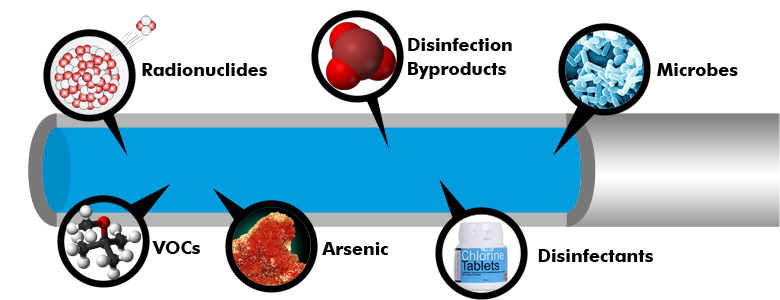
Microbes
Fecal Coliform and E Coli are bacteria whose presence indicate that the water may be contaminated with human or animal wastes. Microbes in these wastes can cause short-term effects, such as diarrhea, cramps, nausea, headaches, or other symptoms.
Cryptosporidium is a parasite that enters lakes and rivers through sewage and animal waste. This microbe has an outer shell that allows it to survive outside the body for long periods of time which makes it tolerant to many chlorine disinfectants. It causes cryptosporidiosis, a mild gastrointestinal disease. However, the disease can be severe or fatal for people with severely weakened immune systems. EPA and CDC have prepared advice for those with severely compromised immune systems who are concerned about Cryptosporidium.
Giardia lamblia is a parasite that enters lakes and rivers through sewage and animal waste. It causes gastrointestinal illness (e.g. diarrhea, vomiting, cramps). Giardia, like cryptosporidium, can survive long periods of time outside the body and is also difficult to treat with just basic chlorine disinfectants.
Coliform Bacteria are common in the environment and are generally not harmful. However, the presence of these bacteria in drinking water is usually a result of a problem with the treatment system or the pipes which distribute water. This indicates that the water may be contaminated with germs that can cause disease.
Turbidity has no health effects. However, turbidity can interfere with disinfection because the particles can act as shields for viruses and bacteria and provide a medium for microbial growth. Turbidity may indicate the presence of disease causing organisms. These organisms include bacteria, viruses, and parasites that can cause symptoms such as nausea, cramps, diarrhea, and associated headaches.
Radionuclides
Alpha emitters. Certain minerals are radioactive and may emit a form of radiation known as alpha radiation. Some people who drink water containing alpha emitters in excess of EPA's standard over many years may have an increased risk of getting cancer.
Beta/photon emitters. Certain minerals are radioactive and may emit forms of radiation known as photons and beta radiation. Some people who drink water containing beta and photon emitters in excess of EPA's standard over many years may have an increased risk of getting cancer.
Combined Radium 226/228. The total amount of radium allowed in drinking water is very small. However, people that drink water containing radium 226 or 228 in excess of EPA's standard over many years may have an increased risk of getting cancer.
Radon gas can dissolve and accumulate in underground water sources, such as wells, and in the air in your home. Breathing radon can cause lung cancer. Drinking water containing radon presents a risk of developing cancer. Radon in air is more dangerous than radon in water.
Inorganic Contaminants
Arsenic is a highly toxic heavy metal. Some people who drink water containing arsenic in excess of EPA's standard over many years could experience a wide range of serious problems. Health concerns include damage to the bladder, lungs, heart, kidney and liver. Arsenic can also harm the central & peripheral nervous system and circulatory system. Arsenic exposure has been linked to several types of cancers.
Flouride Many communities add fluoride to their drinking water to promote dental health. Each community makes its own decision about whether or not to add fluoride. EPA has set an enforceable drinking water standard for fluoride of 4 mg/L (some people who drink water containing fluoride in excess of this level over many years could get bone disease, including pain and tenderness of the bones). EPA has also set a secondary fluoride standard of 2 mg/L to protect against dental fluorosis. Dental fluorosis, in its moderate or severe forms, may result in a brown staining and/or pitting of the permanent teeth. This problem occurs only in developing teeth, before they erupt from the gums. Children under nine should not drink water that has more than 2 mg/L of fluoride.
Lead typically leaches into water from plumbing in older buildings. Lead pipes and plumbing fittings have been banned since August 1998. Children and pregnant women are most susceptible to lead health risks. For advice on avoiding lead, see the how to remove lead in your drinking water fact sheet prepared by EPA.
Volatile Organic Contaminants (VOCs)
Disinfectants
Many water suppliers add a disinfectant to drinking water to kill germs such as giardia and e-coli. Especially after heavy rainstorms, your water system may add more disinfectant to guarantee that these germs are killed.
Chlorine Some people who use drinking water containing chlorine in excess of EPA's standard could experience irritating effects to their eyes and nose as well as stomach discomfort.
Chloramines are most commonly formed when chlorine and ammonia are added together to treat drinking water. Water that contains chloramines is usually safe as long as it meets EPA regulations. However, some people who are exposed to chloramines in excess of EPA's standard may experience irritating effects to their eyes, nose and stomach.
Chlorine Dioxide is a water additive used to control taste and odor in water. Some infants and young children who drink water containing chlorine dioxide in excess of EPA's standard could experience nervous system effects as well as anemia. Similar effects may occur in fetuses of pregnant women who drink water containing chlorine dioxide in excess of EPA's standard.
Disinfection Byproducts
Disinfection byproducts form when disinfectants added to drinking water to kill germs react with naturally-occurring organic matter in water.
Total Trihalomethanes. Some people who drink water containing trihalomethanes in excess of EPA's standard over many years may experience problems with their liver, kidneys, or central nervous systems, and may have an increased risk of getting cancer.
Haloacetic Acids. Some people who drink water containing haloacetic acids in excess of EPA's standard over many years may have an increased risk of getting cancer.
Bromate. Some people who drink water containing bromate in excess of EPA's standard over many years may have an increased risk of getting cancer.
Chlorite. Some infants and young children who drink water containing chlorite in excess of EPA's standard could experience nervous system effects as well as anemia. Similar effects may occur in fetuses of pregnant women who drink water containing chlorite in excess of EPA's standard.
MTBE - Methyl Tertiary Butyl Ether
MBTE is a fuel additive, commonly used in the United States to reduce carbon monoxide and ozone levels caused by auto emissions.
Due to its widespread use, reports of MTBE detections in the nation's ground and surface water supplies are increasing.
The Office of Water and other EPA offices are working with a panel of leading experts to focus on issues posed by the continued use of MTBE and other oxygenates in gasoline.
EPA is currently studying the implications of setting a drinking water standard for MTBE.
Drinking water, including bottled water, may reasonably be expected to contain at least small amounts of some contaminants.
RELATED POSTS:
 What affects the quality of surface and groundwater?

.
Drinking Water
Contaminants - Escherichia Coli, E.Coli
.
.
.
 .
.
.
.
.
.
ENDOCRINE
DISRUPTORS
http://www.freedrinkingwater.com/water-contamination/water-contaminants-pollutants-list.htm
 I CAST ALL MY CARES UPON YOU
  VERSE 1: